


Off the Hamster Wheel: Why Your Fundraisers Are Chasing Money
A few months before the start of every fiscal year, it begins again.
The annual goal gets set — a little higher than last year, because growth is expected. The fundraiser builds the plan, works the plan, and stretches the plan. Galas, appeals, grants, major gifts. By winter, they’re sprinting. By spring, they’re exhausted. And by the time the fiscal year closes, one of two things has happened: they hit their goal and are immediately handed a bigger one, or they miss it and spend the next quarter explaining why.
Then the wheel turns. Same cycle. New year. New number. Same chase.
If this sounds familiar, you’re not imagining it.
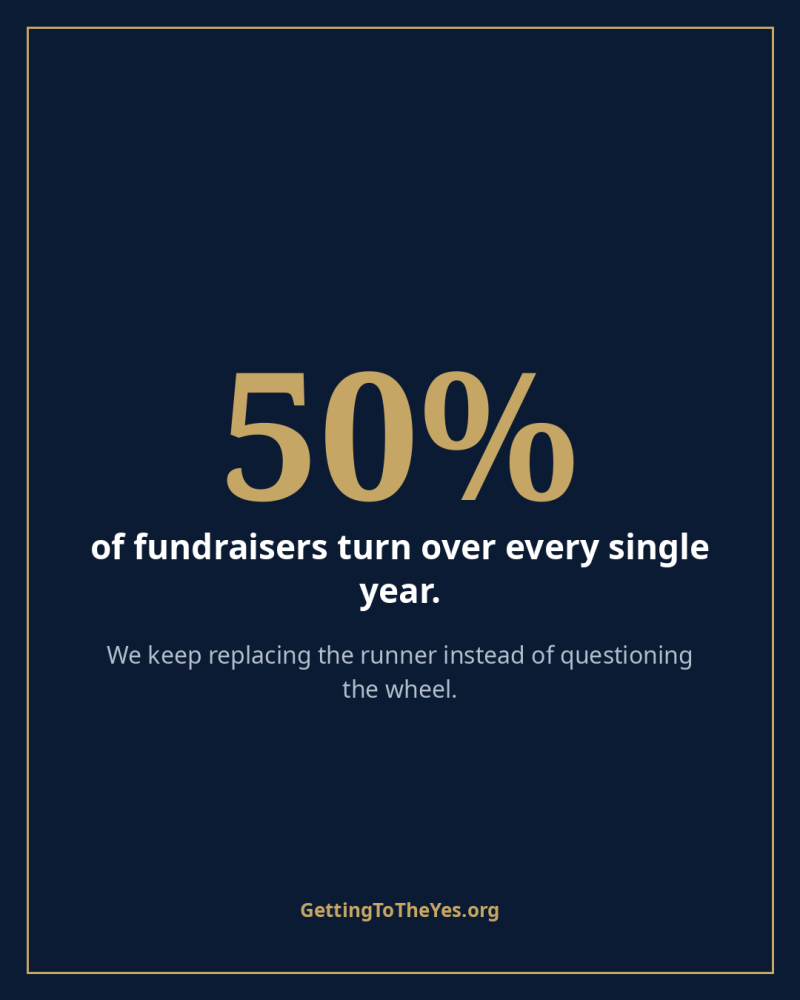
Fundraiser turnover hovers around 50% annually, and the average tenure of a development professional is often measured in months rather than years.
Why the Wheel Keeps Spinning
The hamster wheel isn’t a people problem. It’s a systems problem. Here’s what keeps it in motion:
1. The annual-goal trap. When success is defined as “more than last year” every single year, fundraising becomes a race without a finish line. There’s no season of consolidation, no year of deepening — only climbing.
2. Chasing dollars instead of building relationships. Under pressure, fundraisers default to what’s measurable this quarter: transactions. But philanthropy is built on trust, and trust compounds slowly. The chase rewards speed; the mission requires patience.
3. A board that cheers but doesn’t run alongside. Too many boards approve ambitious revenue goals while staying on the sidelines of fundraising itself. The fundraiser is then expected to deliver board-level results with only staff-level support.
4. A Culture of Philanthropy is invisible. When fundraising is treated as one department’s job rather than the organization’s shared responsibility, the fundraiser carries the entire weight of revenue alone.
5. The “we’ll invest when we raise more” paradox. Organizations starve the development function — lack of staff, limited systems, minute levels of professional development — and then wonder why revenue stalls. You cannot cut your way to growth.
How Nonprofit Leaders Can Stop the Chase
Getting off the wheel doesn’t mean lowering ambition. It means building a fundraising operation that compounds instead of exhausts. Here’s how:
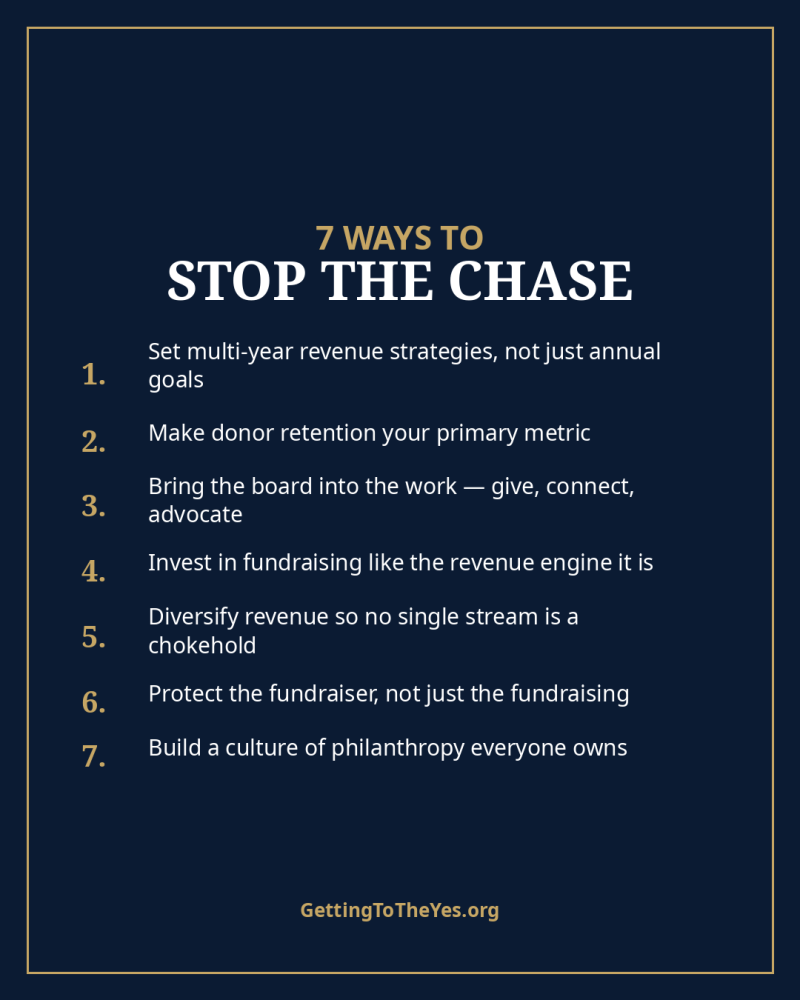
1. Set multi-year revenue strategies, not just annual goals. A three-year fundraising roadmap — with years for building, deepening, and growing — gives fundraisers room to invest in relationships that pay off over time. Annual targets still matter, but they should serve the strategy, not replace it.
2. Make donor retention your primary metric. It’s far less expensive to keep a donor than to find one. Organizations that obsess over retention — through genuine stewardship, not just thank-you letters — build a base that grows on its own. Chasing new dollars while leaking old ones fosters the wheel.
3. Dismantle the wheel. Boards don’t need to “fundraise” the way staff does. They need to open doors, tell the story, and champion the mission in rooms the fundraiser can’t enter. A board that gives, connects, and advocates changes the entire physics of the operation.
4. Invest in fundraising like the revenue engine it is. Fund development staff, modern systems, and professional growth aren’t costs to minimize — they’re the infrastructure of every dollar raised. The organizations that raise the most are rarely the ones that spend the least on fundraising.
5. Diversify revenue so no single stream becomes a chokehold. Over-reliance on one gala, one grant, or one major donor turns every year into a high-wire act. A balanced portfolio — annual giving, major gifts, grants, events, planned giving — absorbs shocks and ends the panic cycle.
6. Protect the fundraiser, not just the fundraising. Burnout isn’t a personal failing; it’s an organizational outcome. Realistic portfolios, genuine leadership support, time to recover after big campaigns, and a supervisor who absorbs pressure instead of amplifying it — these are retention strategies, not perks.
7. Build a culture of philanthropy — where everyone owns the mission’s resourcing. When the CEO, the board, program staff, and the fundraiser all see themselves as ambassadors of the mission’s financial health, the weight is distributed. The fundraiser stops being the lone runner and becomes the coach of a team that’s already moving.
The Wheel Only Turns If We Keep Running On It
The hamster wheel persists because we’ve normalized it. We’ve treated fundraiser burnout as inevitable, turnover as expected, and the annual chase as just “how fundraising works.”
It isn’t. This is how fundraising works without leadership.
The organizations breaking free aren’t working less hard; they’re working from a different design. Shared ownership. Long horizons. Real investment. A culture where philanthropy belongs to everyone.
Step off the wheel. Build the track instead.
Ready to get off the hamster wheel? Find practical tools, books, and resources for building a culture of philanthropy at GettingToTheYes.org.
This article first appeared in The Yes Advantage Insider, the Getting to the Yes newsletter on LinkedIn.