


The Burnout No One Talks About

Everyone assumes fundraiser burnout comes from long hours and ambitious goals.
It doesn’t. Not really. (Sure, these are components of burnout, but the straw that often breaks the proverbial fundraiser’s back is a simple equation: pressure minus control).
Talk to fundraisers who are running on empty, and you’ll hear something different. It’s not the gala that broke them. It’s not the appeal calendar.
It’s the quiet, crushing knowledge that if they don’t raise the money, people could lose their jobs and the community will lose services it cannot afford to lose.
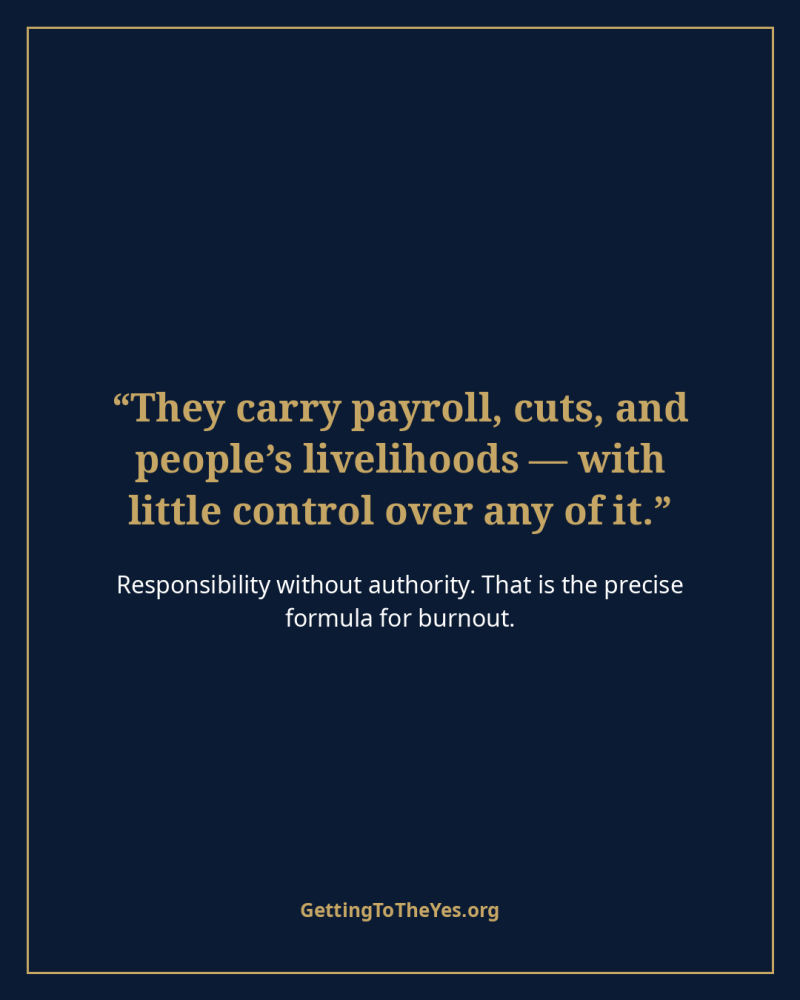
Payroll. Program cuts. Livelihoods. The food bank that feeds a neighborhood. The shelter that keeps a family off the street. All of it, resting in some real sense on whether one person can convince enough other people to give.
That is the weight. And it’s breaking people.
Pressure Is Not the Same as Goals
Goals are numbers on a page. Pressure is what those numbers mean.
A $2 million goal is just arithmetic until you understand that $2 million is what stands between your colleagues and layoffs, between your clients and closed doors. Suddenly, the fundraiser isn’t chasing a target. They’re holding up the building.
And here’s the cruelest part: they carry that responsibility with remarkably little control over any of it. Boards and leadership set the budgets. Boards and leadership approve — or deny — the staffing. Boards and leadership decide whether to invest in the development function or starve it. The fundraiser absorbs the consequences of decisions they didn’t make, for outcomes they’re fully accountable for.
Responsibility without authority. That is the precise formula for burnout.
Why No One Sees It
This kind of burnout is invisible because it disguises itself as dedication.
The fundraiser who lies awake running donor scenarios through their head isn’t complaining. They’re committed (maybe overly so). The CEO who can’t stop thinking about cash flow isn’t struggling. They’re responsible. We praise the very behavior that’s destroying them.
“She’ll figure it out, she always does” is not a compliment. It’s an abdication.
And because the weight is emotional rather than logistical, it doesn’t respond to the usual fixes. A lighter calendar doesn’t help when the heaviness is existential. Time management can’t solve the knowledge that a missed goal means a program closes.
How Leaders Can Lift the Weight
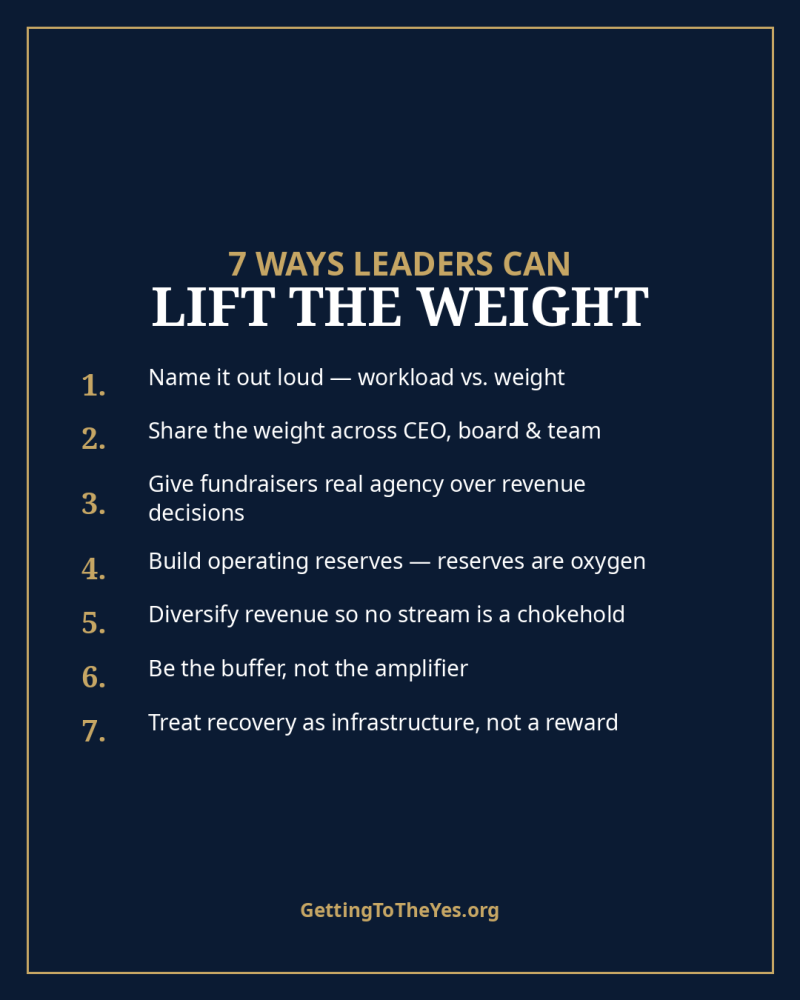
You can’t eliminate the stakes of nonprofit work. The mission matters, and that’s the point. But leaders can change how the weight is carried. Here’s how:
1. Name it out loud. Distinguish workload burnout from weight burnout. When a fundraiser is drowning, ask whether it’s the hours — or the heaviness. You can’t fix what you won’t name.
2. Share the weight. Revenue responsibility cannot live with one person. When the CEO and board genuinely co-own the organization’s financial health, not just approve the budget, but actively work to fund it, the weight distributes. Shared weight is bearable weight.
3. Give fundraisers real agency. If someone is accountable for revenue, they need a voice in the decisions that drive it: budgets, staffing, strategy, timelines.Authority should match responsibility. Anything less is a setup.
4. Build operating reserves. Nothing reduces existential pressure like a cushion. Organizations with healthy reserves give their fundraisers room to build relationships instead of panicking quarter to quarter. Reserves are like oxygen.
5. Diversify revenue streams. When one gala or one grant or one major donor represents survival, every cycle is a crisis. A balanced portfolio doesn’t just protect the organization; it protects the people carrying it.
6. Be the buffer, not the amplifier. The person above the fundraiser sets the emotional temperature. Leaders who absorb pressure — who say “we’ll figure this out together” instead of “the number is the number” — don’t just prevent burnout. They build loyalty that no salary can buy.
7. Treat recovery as infrastructure. Rest isn’t a reward for hitting the goal; it’s what makes the next goal possible. Real time off without checking email, answering calls, feeling guity for taking PTO, with genuine disconnection, and — for those who’ve carried the weight longest — serious recovery like paid sabbaticals.
An exhausted fundraiser isn’t a dedicated one. They’re a departing one.
The Weight Is Real. So Is the Way Out.
The fundraisers and CEOs carrying your organization’s financial survival are not fragile. They are doing one of the hardest jobs in the sector: holding the tension between what the community needs and what the resources allow, every single day.
They don’t need you to lower the stakes. They need you to help carry them.
For more on building fundraising operations that sustain people — not just revenue — explore practical tools and resources atGettingToTheYes.org.
This article first appeared in The Yes Advantage Insider, the Getting to the Yes newsletter on LinkedIn.