


The Partnership Every Mission Depends On
Most nonprofits don’t talk about this nearly enough.
Your fundraising staff cannot do this alone. And they were never supposed to.
In Chapter 8 of Getting to the Yes: A Board Member’s Guide to Philanthropic Leadership,we dive into the relationship between board members and fundraising staff, and why getting that dynamic right is one of the most powerful levers you have for mission advancement. Not just for bigger gifts. For a stronger culture of generosity that runs all the way through your organization.
So let’s talk about what that actually looks like in practice.
The Conductor Needs the Orchestra
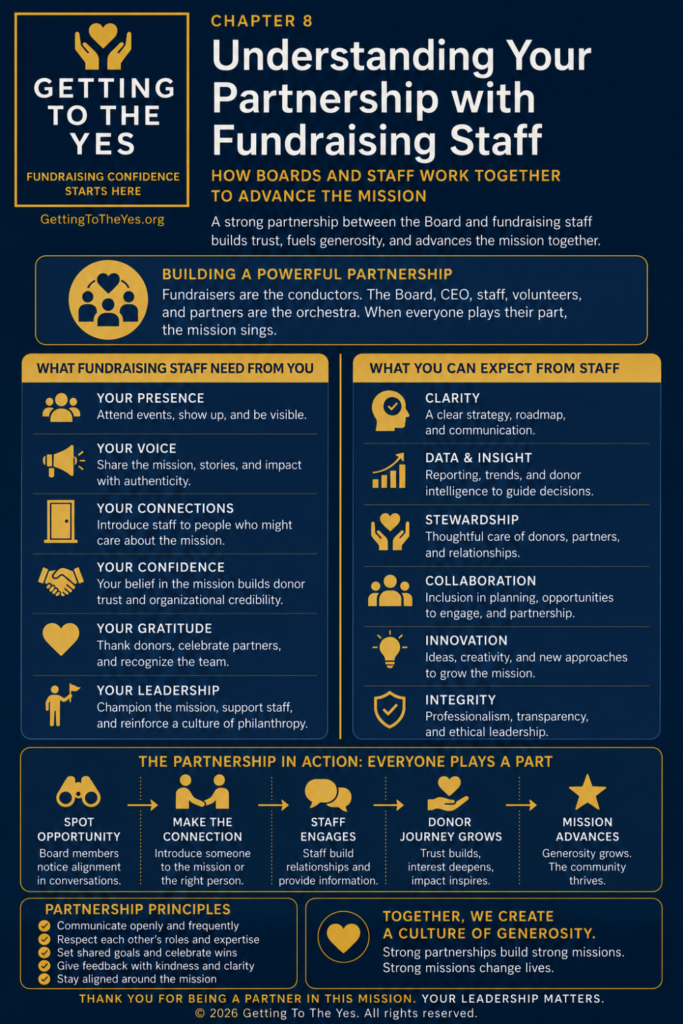
I use this metaphor a lot: your fundraisers are the conductors. The board, the CEO, the volunteers, the partners, they are the orchestra. A conductor waving a baton in an empty hall isn’t directing a concert. The music only happens when everyone plays their part.
That means your role as a board member is not to fundraise in the traditional sense. You don’t need to make cold calls or solicit strangers. What you do need to bring is presence, voice, connections, confidence, gratitude, and leadership.
Those six things? They are not optional add-ons. They are the foundation.
What Staff Owe You in Return
This partnership runs both directions, and it’s important to name that clearly. When staff are functioning at their best, you should expect clarity on strategy and communication, data and donor intelligence that informs your conversations, thoughtful stewardship of the relationships you help build, and a seat at the table in planning and engagement opportunities.
If you’re not receiving those things, that’s a conversation worth having. Strong partnerships require accountability from both sides.
The Five-Step Flow That Changes Everything
One of my favorite frameworks in this chapter is what I call Partnership in Action. It goes like this:
You spot an opportunity. Maybe someone at a community event mentions they care about your organization’s mission or the focus of its work. You make a connection, you introduce that person to the right staff member, or share a story that links them to the mission. Staff engage and build the relationship from there. The donor’s interest deepens. And ultimately, the mission advances because generosity grows.
That’s it. You don’t have to close the gift. You just have to open the door.
The Principles That Hold It Together
None of this works without trust. And trust is built through consistent behavior over time. Communicate openly. Respect each other’s roles. Set shared goals and celebrate the wins, even the small ones. Give feedback with kindness. Stay aligned around the mission, especially when things get hard.
Strong partnerships don’t just build strong missions. They change lives.
If you’re a board member reading this, thank you for being involved in this work. Your leadership matters more than you know.
And if you’re a fundraiser sharing this with your board, that’s exactly the kind of move that builds the culture we’re all striving for: A Culture of Philanthropy. Here’s a tool you can use with your Board members:
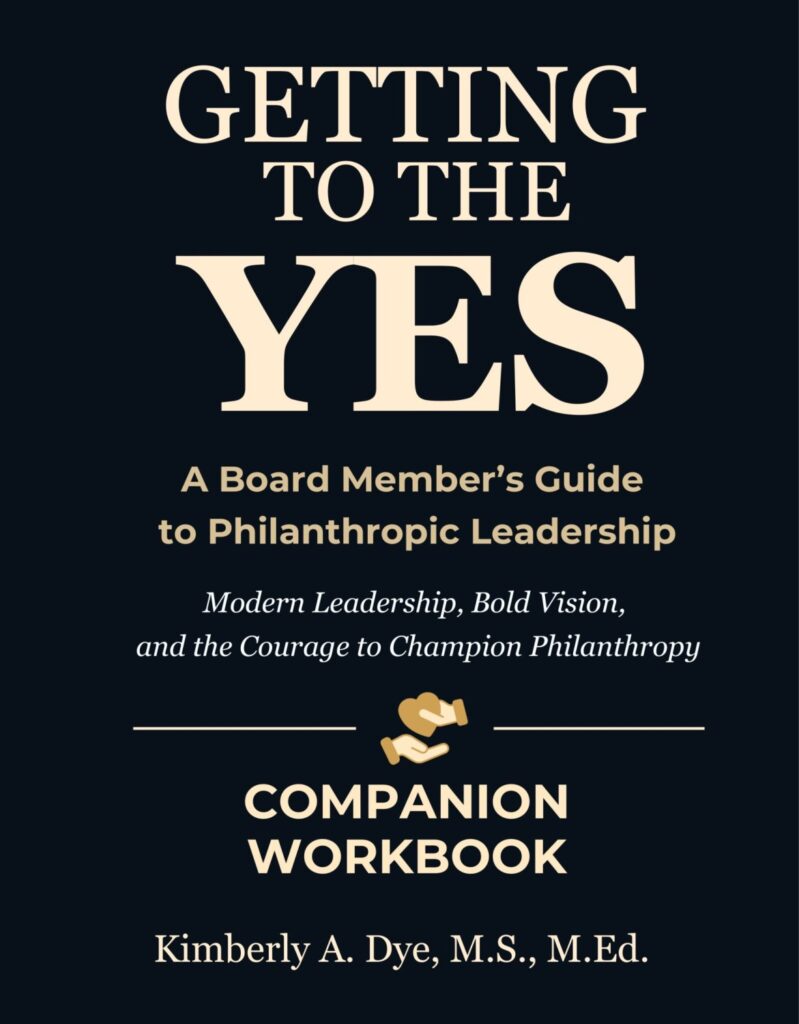
Ready to level up your Board development activities? Consider the Companion Workbook to the popular Getting To the Yes: A Board Member’s Guide to Philanthropic Leadership. Order direct at GettingToTheYes.org/shop or with fast delivery from Amazon.
This article first appeared in The Yes Advantage Insider, the Getting to the Yes newsletter on LinkedIn.