


Maslow’s Hierarchy for Fundraisers
Most nonprofits don’t talk about this nearly enough: your fundraising staff cannot do this alone. And they were never supposed to.
We spend a lot of time in this sector talking about donor relationships, board engagement, and campaign strategy. What we talk about far less is the internal ecosystem that makes all of that possible: the professional journey of the fundraiser doing the work every single day.
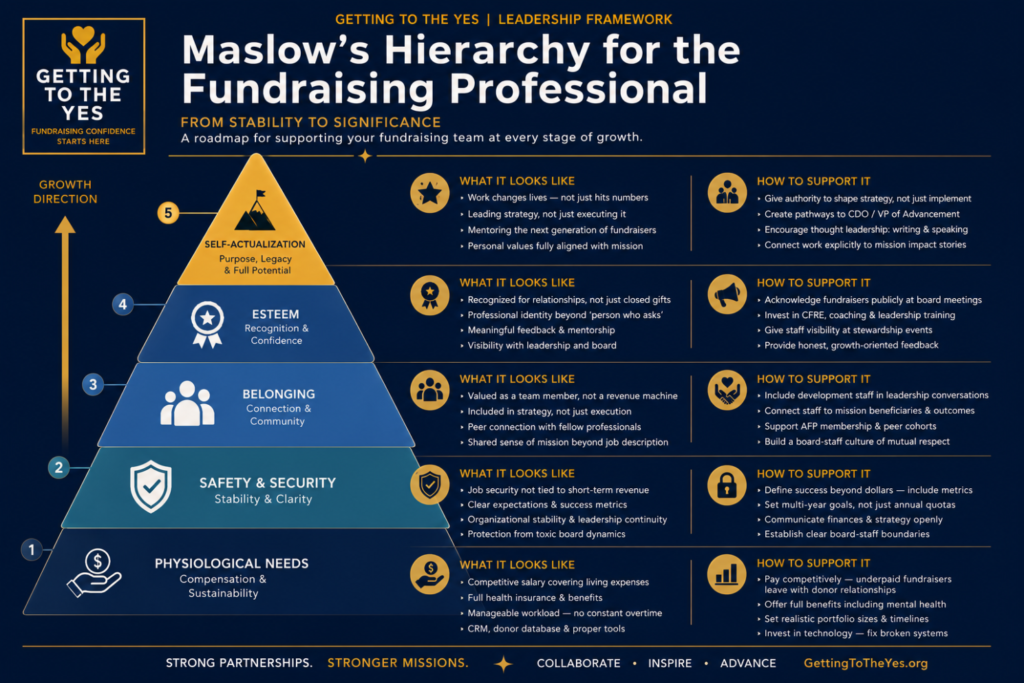
Abraham Maslow mapped human motivation in five stages, from basic survival needs at the base to self-actualization at the peak. What he described for human beings maps almost perfectly onto what fundraising professionals need to do their best work — and what organizations must provide to get them there.
Start at the Bottom — and Mean It
Before a fundraiser can build donor relationships, they need a livable salary, real benefits, and a workload that doesn’t require burning out by March. This sounds obvious. Organizations often skip it anyway: underpaying development staff, overloading portfolios, and handing people broken technology while expecting major gift results.
You cannot build from an empty foundation. Physiological needs are not a nice-to-have. They are the job.
Safety Is a Strategy
The second tier is about security, and in fundraising, that means job stability not tied exclusively to short-term revenue swings, clear expectations about what success actually looks like, and organizational transparency that lets staff plan and breathe. Fundraisers who feel insecure default to transactional thinking. They chase the quick gift instead of the transformational relationship. Safety is not coddling. It is how you get the long game.
Belonging Changes Everything
A fundraiser who feels like an insider, included in strategy, connected to mission outcomes, valued as a team member rather than a revenue machine. Authenticity. Ownership. Genuine passion for the work. Organizations that exclude development staff from leadership conversations and then wonder why fundraising feels flat are solving the wrong problem.
Recognition Is a Performance Tool
Esteem matters. A fundraiser who is publicly acknowledged, professionally invested in, and given visibility with leadership and the board does not just feel better, they perform better. Confidence in a donor meeting is not a personality trait. It is the result of an organization that has built that confidence intentionally over time.
The Goal Is Self-Actualization
At the top of the pyramid is the fundraiser who has stopped just doing the job and started owning the mission. They mentor others. They shape strategy. Their personal values and professional identity are fully aligned with the work. They build movements, not just campaigns.
That fundraiser does not appear by accident. They are grown by organizations that invest in every level of this hierarchy, from the first paycheck to the last gift

ORDER NOW:
Order direct at GettingToTheYes.org or on Amazon.
This article first appeared in The Yes Advantage Insider, the Getting to the Yes newsletter on LinkedIn.