


The Most Valuable Word in Fundraising Isn’t “Yes.” It’s “No.”
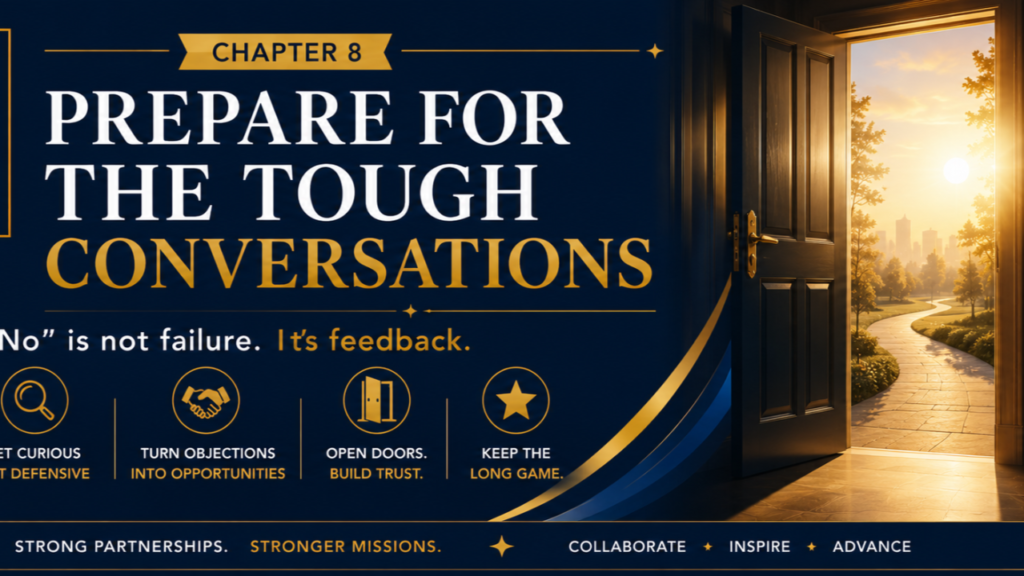
What if every objection was actually an invitation to build a stronger relationship?
Most people dread hearing the word no.
Fundraisers aren’t immune.
In fact, when you’re in the middle of a campaign, hearing “no” can feel personal. It can feel like a setback. It can feel like you’re running out of time.
I know that feeling well.
Right now, I’m in the middle of the private phase of a public-private partnership campaign with a $100 million fundraising goal. We’ve reached the halfway point—a milestone I’m incredibly proud of—but if I’m being candid, I wish we were further along than we are today.
Every campaign has moments like this.
The temptation is to push harder, ask louder, or become discouraged by the donors who aren’t ready.
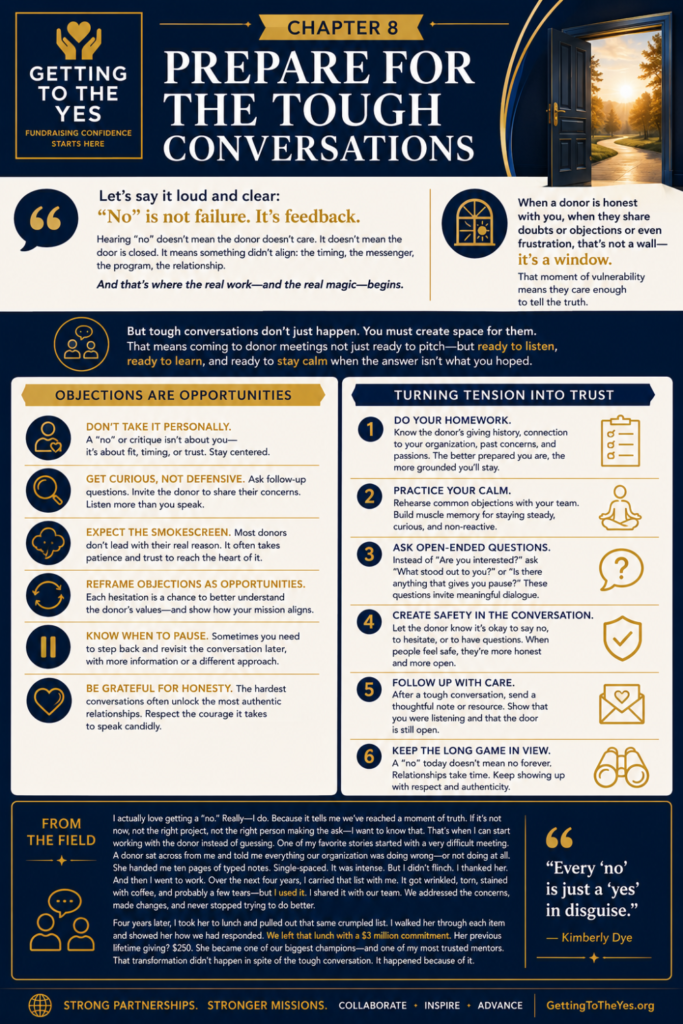
But Chapter 8 of my book, Getting to the Yes: A Guide for Creating a Compelling Campaign, reminds me of something I learned years ago that has never stopped being true:
“No” is not failure. It’s feedback.That simple mindset changes everything.
The Conversation Begins Where the Pitch Ends
Too often, we think the fundraising meeting is over when the donor says no. Sometimes that’s actually when it begins. A donor who is willing to tell you:
“I’m not convinced.”
“This doesn’t feel like the right priority.”
“I’m concerned about…”
…is giving you something incredibly valuable.
They’re giving you the truth. That honesty is a gift because now you’re no longer guessing. You’re learning. And learning creates opportunity.
Every Objection Has a Story Behind It
One of the biggest mistakes fundraisers make is believing the first objection is the real objection. It rarely is.
“I need to think about it.”
“We’ve already committed elsewhere.”
“Now isn’t a good time.”
Those are often smoke screens.
The real conversation doesn’t begin until we become curious enough to ask thoughtful follow-up questions—and patient enough to truly listen.
Instead of defending our organization…
Instead of rushing to overcome objections…
We should become students of the donor. Because objections aren’t barriers. They’re clues.
Tough Conversations Build Strong Relationships
One of my favorite fundraising stories didn’t end with a gift. It started with criticism. A donor once sat across from me and handed me ten single-spaced pages describing everything she believed our organization was doing wrong. Most people would have left that meeting discouraged.
I left grateful.
Over the next four years, I carried those pages everywhere. They became worn, wrinkled, coffee-stained, and probably caught a few tears along the way. But we listened. We improved. We addressed concern after concern. Four years later, I invited that donor to lunch and brought those same battered pages with me.
Together, we reviewed every item. By the end of lunch, she had made a $3 million commitment.Before that conversation? Her lifetime giving totaled $250.That transformation didn’t happen despite the difficult conversation. It happened because of it.
Five Ways to Prepare for the Tough Conversations
Great campaign leaders don’t avoid difficult conversations. They prepare for them. Before every significant donor conversation, remember to:
Do your homework. Understand the donor’s history, passions, and previous concerns.Practice your calm. Confidence isn’t knowing every answer—it’s remaining steady when you don’t.Ask better questions. Curiosity almost always beats persuasion.Create safety. Let donors know it’s okay to disagree or hesitate.Play the long game. Today’s “no” may simply be tomorrow’s “not yet.”
Campaigns Are Built on Trust
Large campaigns aren’t won because every meeting ends with a commitment. They are won because every meeting builds trust. Every honest conversation deepens understanding. Every objection teaches us something. Every relationship grows a little stronger.
That’s why I still believe one of the most powerful statements I’ve ever written:
Every “no” is simply a “yes” in disguise.
Not because every donor eventually gives. Because every honest conversation gives us the opportunity to become better fundraisers, listeners, leaders, and partners.
Sometimes the greatest gift a donor gives you isn’t a check. It’s the truth.
And if you’re willing to listen…
The yes often follows.
Available on Amazon or at GettingToTheYes.org/shop.
This article first appeared in The Yes Advantage Insider, the Getting to the Yes newsletter on LinkedIn.