


The Invitation Is the Impact
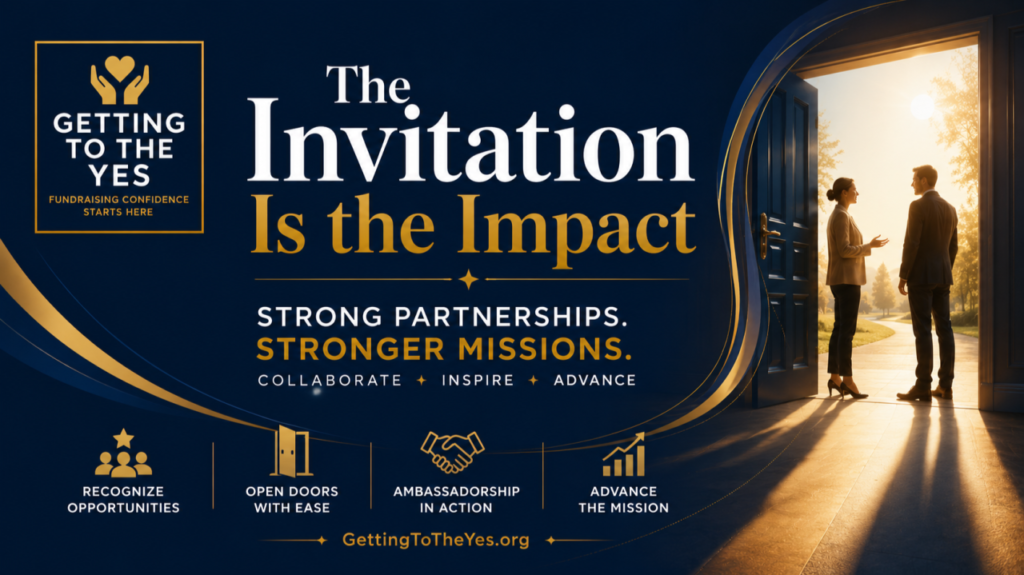
Most board members think their job is to help ask for money.
They’re wrong.
The most effective board engagements rarely start with asking for support. They start with an introduction. A conversation. An invitation. And those simple moments often create more philanthropic momentum than the most carefully crafted solicitation.
The Invitation Is the Impact
One of the biggest misconceptions in nonprofit leadership is that board members exist to “fundraise”.
That belief creates anxiety.
It creates avoidance.
And it causes many otherwise talented board members to disengage from one of the most powerful roles they can play.
Asking for gifts of support isn’t where most board members create their greatest impact. Connection is. When we ask board members to think like ambassadorsrather than solicitors, everything changes.
Instead of worrying about the perfect “ask”, they begin looking for opportunities to introduce people to the mission. Instead of fearing rejection, they focus on building relationships. Instead of carrying the pressure of fundraising, they embrace the privilege of opening doors.
And that shift matters.
People Trust People
Most donors do not begin their journey because they received a proposal. They begin because someone they trust shared something meaningful.
A story.
An experience.
An invitation.
A board member says, “You should come see this.” “I’d love for you to meet our CEO.” “This organization has made a real difference in our community. I think you’d enjoy learning more about what they’re doing.”
None of those statements asks for money. Yet all of them move someone one step closer to engagement.
Small Actions Create Big Ripples
Board ambassadorship isn’t complicated.
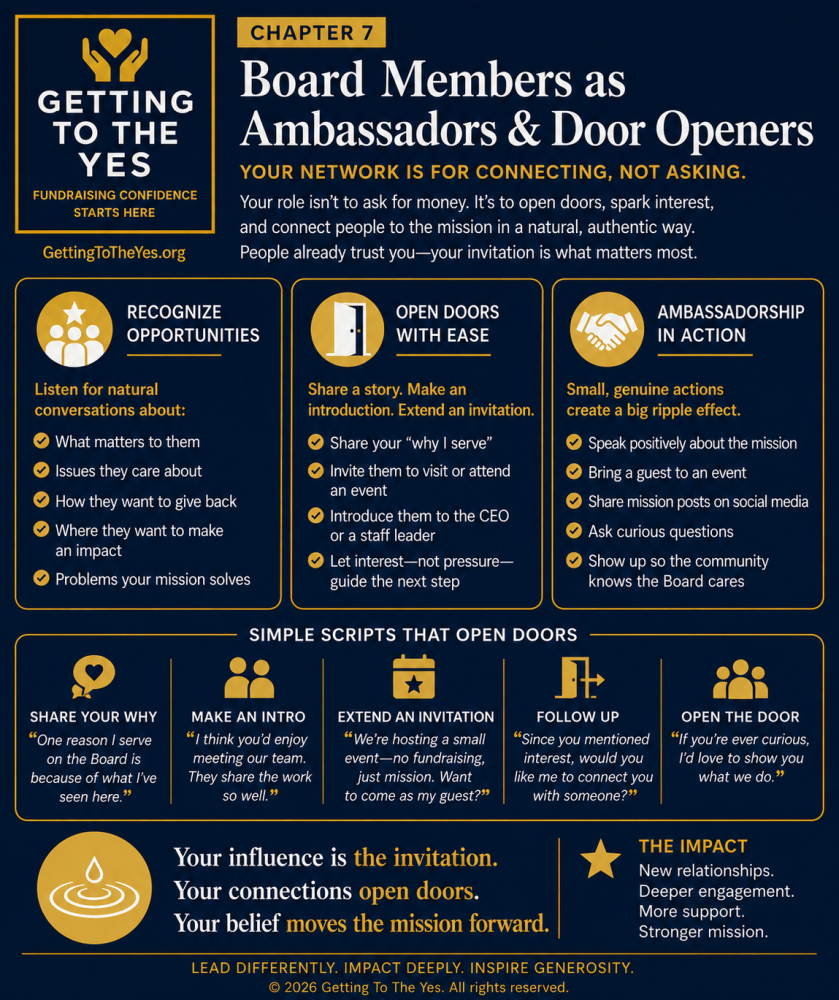
It often looks like:
Sharing why you serveBringing a guest to an eventIntroducing someone to a staff leaderPosting about the mission on social mediaAsking thoughtful questionsShowing up consistently
These actions seem small, but collectively, they build visibility, credibility, and trust.
And trust is what ultimately fuels generosity.
The Board’s Hidden Superpower
Every board member already has something the organization needs: A network. Not a list of prospects. A network of relationships.
Friends.Colleagues.Neighbors.Business partners.Community leaders.People who already trust them.
The goal is not to turn every relationship into a donor relationship. The goal is to create opportunities for meaningful connection. When board members understand that distinction, they become dramatically more effective.
Five Simple Conversations That Open Doors
Sometimes board members need permission to keep it simple.
Share Your Why
“One reason I serve on the Board is because of what I’ve seen here.”
Make an Introduction
“I think you’d enjoy meeting our team. They share the work so well.”
Extend an Invitation
“We’re hosting a small event—no fundraising, just mission. Want to join me?”
Follow Up
“Since you mentioned interest, would you like me to connect you with someone?”
Open the Door
“If you’re ever curious, I’d love to show you what we do.”
The Real Impact
When board members embrace their role as ambassadors:
New relationships are formedCommunity awareness growsDonor confidence increasesStaff gain valuable introductionsThe mission reaches more people
Eventually, generosity follows. Not because someone was pressured. Because someone was invited. At the end of the day, influence is the invitation. Connections open doors, and belief moves the mission forward.
Find out why Boards throughout the U.S. are reading Getting To The Yes: A Board Member’s Guide to Philanthropic Leadership by ordering your own copy today. Also available on Amazon!
This article first appeared in The Yes Advantage Insider, the Getting to the Yes newsletter on LinkedIn.