


The Permission Gap: The Real Reason Boards Don’t Step Up
Most board members aren’t disengaged. They aren’t apathetic. They aren’t too busy, too uninterested, or too intimidated.
What they are—most of the time—is uncertain.
Uncertain about the boundaries. Uncertain about the “right way” to help. Uncertain about where staff wants them involved… and where staff doesn’t. Uncertain about what leadership actually looks like in their role.
And here’s the powerful truth I’ve discovered, over and over, across 25+ years of working with nonprofit boards:
Boards don’t need more information. They need permission.
Permission to lead. Permission to use their networks.
Permission to take action without fearing they’ll overstep.
Permission to be the partners they genuinely want to be.
This “Permission Gap” is the most overlooked barrier to board engagement, and closing it is the missing key that transforms passive boards into catalytic, mission-driven, and door-opening leaders.
This week’s The Yes Advantage Insider is all about solutions, specifically: How to Close the Permission Gap so your Board actually does what you need them to do.
Why Boards Stay Quiet…Even When They Care Deeply
When I talk to Board members privately (and I do this often), most of them tell me the same thing:
“I don’t know where the line is.”
“I don’t want to annoy the staff.”
“I’m happy to help; just tell me exactly how.”
“I don’t want to bother my friends.”
“I don’t know how to ask someone to support the organization.”
These are accomplished professionals, often retired CEOs, entrepreneurs, advisors, and community leaders. They’re confident everywhere except the nonprofit Boardroom…at least when it comes to philanthropic direction of the organization. They’re standouts in the area of governance, but philanthropy often makes them shudder.
Why?
Because the nonprofit sector unintentionally socializes board members into hesitation.
In our effort to be “respectful of staff time” and “aware of roles,” we create a dynamic where board members don’t feel empowered; they feel contained.
So when a fundraising campaign hits a critical moment…
When a door needs to be opened…
When a big introduction could change everything…
They hesitate. And in that hesitation, opportunity evaporates.
The Permission Gap wins.
The Leadership Reversal
Here’s the counterintuitive shift that changes everything: Staff can’t wait for the Board to self-activate. Staff must activate the Board.
This contradicts traditional governance training, which typically advises: “Boards should govern, staff should manage.”
And yes…roles matter. But leadership isn’t hierarchical. It’s relational. Board engagement isn’t about reciting bylaws; it’s about unleashing capacity. Which means the staff—especially the CEO and chief fundraiser—must lead the Board in how to lead.
What do I mean?
I mean, make it explicit:
- “This is the moment we need you.”
- “Here are three very specific ways you can make an impact this month.”
- “Here is how to open a door without feeling awkward.”
- “Here’s language you can borrow.”
- “Here’s the boundary line, and here’s where you have total freedom.”
This isn’t hand-holding. This isn’t infantilizing highly skilled leaders. This is equipping them with clarity and permission.
And when Boards get clarity and permission? They become unstoppable.

The “Tell Me What Good Looks Like” Principle
In my newly released book (which is written for Board members personally), I introduce something I’ve taught boards for years:
“If you want a Board to act, you must define what good looks like.”
Not aspirationally.
Not philosophically.
Not in a 32-page strategic plan they’ll never revisit.
I mean practically:
- What exactly does it look like to be a mission ambassador?
- What exactly does it look like to invite someone to a site visit?
- What exactly does it look like to open a meaningful door?
- What exactly does it look like to champion a capital campaign?
Boards need visible models of leadership, not vague expectations. When they know what ‘good’ looks like, they begin to say: “Oh—I can do that. Actually, I want to do that.”
You shift the dynamic from compliance to enthusiasm.

The 3-Step Framework to Close the Permission Gap
Here is the actionable framework you can teach your readers—and use with your Board this week.
1. Declare the Moment
Boards activate when a moment feels real. You can create that urgency in 60 seconds by saying:
“This is an inflection point.
Here’s why it matters.
Here’s how your leadership will change the outcome.”
People rise when the moment calls them forward. However, they must hear the call.
2. Give Them Specific Guidance and Hold Them Accountable
Board members love concrete actions with a clear “why” behind each. For example:
- “Invite two colleagues to our December site tour.”
- “Share this one-paragraph story at your next business lunch.”
- “Forward this campaign preview to someone who cares about mental health.”
- “Ask one friend to sit down with our CEO for 20 minutes (and do so within the next four weeks).”
Low-lift. High-impact. Clear permission.
But clarity alone isn’t enough — you must pair it with consistent accountability.
Accountability isn’t about policing or pressure. It’s about reinforcing what matters, celebrating progress, and keeping the mission at the forefront. When Board members know you’ll follow up, check in, and acknowledge their effort, they’re far more likely to follow through…and to take pride in doing so.
Small, actionable steps — paired with light, supportive accountability — create momentum. This is how you shift a Board from well-meaning to mission-moving.
3. Celebrate Action Relentlessly
Boards repeat the behaviors you celebrate. If someone makes an introduction, even a small one? Spotlight it in the next meeting. If someone brings a colleague to an event? Name it and appreciate it. If someone closes a gift? Celebrate the process, not only the outcome.
Celebration becomes fuel.
Fuel becomes momentum.
Momentum becomes culture.

This Is How You Build a Board That Leads Philanthropically
Imagine a nonprofit culture where:
- Board members open relationship doors consistently.
- Those Board members know exactly what to do next.
- Staff feel supported, not alone.
- The mission has more reach, more visibility, more resources.
- Engagement doesn’t have to be begged for—it’s volunteered
That is what happens when you close the Permission Gap.
Not with complicated governance charts. Not with more PowerPoints. Not with longer agendas. With something simpler, more human, and more powerful:
People want to help.
They just need to know they’re allowed to.
Give them the language. Give them the clarity. Give them the green light. And they will lead with heart, energy, and ownership.
What This Means for Your Board
As you read this, think about your own Board, or the Board you serve on.
- Where might there be a Permission Gap?
- Where might leaders be waiting for clarity you haven’t yet provided?
- What could shift if you named the moment and gave them one confident next step?
Board transformation doesn’t require a retreat, a consultant, or a governance overhaul. It requires inviting people into their leadership…intentionally, clearly, and boldly.
That is the heart of the work.
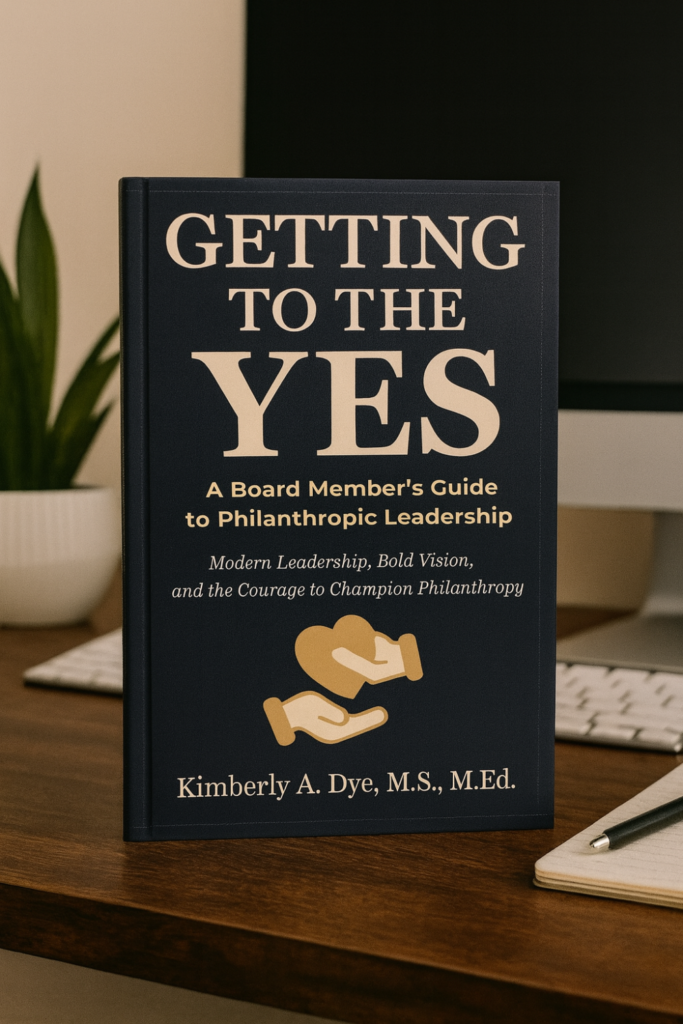
If the Permission Gap resonated with you today, if you recognized your own Board in these patterns, or if you felt a quiet “This is great information, but how do I inspire my Board to lead a culture of philanthropy in my own organization?”, my latest book may be the missing piece that shifts your Board from supportive to truly engaged.
Written for Board Members, So Leaders Don’t Have to Carry the Hard Conversations Alone
Getting to the Yes: A Board Member’s Guide to Philanthropic Leadership demystifies the psychology behind how Board members actually step into leadership, and how you, as a CEO, development leader, or Board member yourself, can guide them there with clarity, confidence, and humanity.

Inside, you’ll find:
- A new framework for Board engagement built on permission, not pressure
- The exact tools, prompts, and language that move hesitant Board members into action
- Real-world examples you can lift and use immediately
- Training activities you can implement in your next Board meeting
- A step-by-step Board Activation Plan you can customize to your organization
- The mindset shifts that make the most significant difference in campaigns, major gifts, and culture change
The definitive blueprint for effectively closing the Permission Gap once and for all.
The work of Board activation is ongoing, but it doesn’t have to be overwhelming. A few intentional shifts can change how your Board shows up, how your mission moves forward, and how supported you feel as a leader. When leaders model clarity and courage, Boards rise to meet them. This is how you build a culture of philanthropy: one aligned step at a time.